Online education
SIGMABYTE
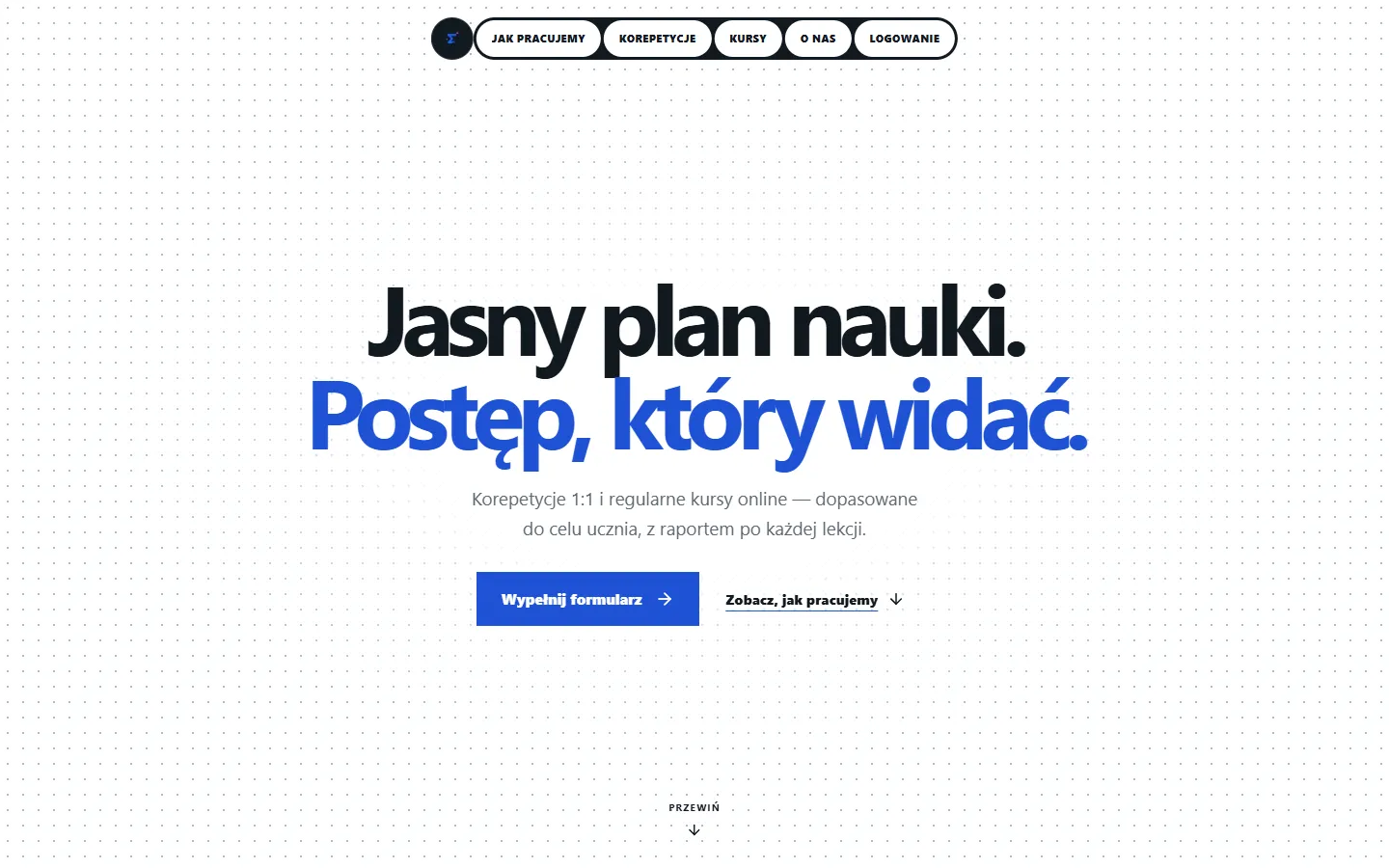
Our own product: an online tutoring and course platform for maths and programming. After every lesson students know their next step, and parents follow progress in their own dashboard.
View case studyWe help founders and companies turn a recurring problem into a digital product. We start by checking that the problem is real and finish with a version you can sell and keep developing.
There's a product vision, but no certainty that customers will pay for it.
What we do about it: Discovery and validation
Interviews with potential customers, a look at alternatives and a simple test — before you spend the budget on building.
The feature list keeps growing while time and budget run out before anyone uses the product.
What we do about it: MVP
We pick the core problem and build the smallest version that solves it. The rest of the list gets tested against real user data.
A quick first version can't be developed further and every change is expensive.
What we do about it: Growth after launch
We build on an architecture that's ready to grow from day one, so each new version adds features instead of rewriting the product.
You know the industry, but you don't have people to build and maintain the product.
What we do about it: We build and maintain the product
We design, build, launch and keep developing the product — you bring the industry and customer knowledge.
Clickable prototype
A mock-up you can show customers or investors to collect concrete feedback.
Recognise any of these?
Tell us about it. We'll ask a few questions and tell you where we'd start.
We define the problem, the target users and the assumptions to test.
We test the key assumptions in the cheapest way possible.
We build a clickable mock-up for user testing.
We build the first version of the product, focused on the core value.
We launch the product with analytics and error monitoring.
We develop the product based on data, not hunches.
Online education
Our own product: an online tutoring and course platform for maths and programming. After every lesson students know their next step, and parents follow progress in their own dashboard.
View case studyIt depends on the scope — which is exactly why we start by narrowing it down. After discovery we present a realistic plan and quote.
Yes, that's often the most valuable stage. Sometimes it ends with a decision not to build — which is also a good outcome, because it saves money.
We design it so later versions don't require a rewrite from scratch. We only simplify what isn't needed at the start, and we do it deliberately.
Developing our own SaaS products is one of our long-term directions. That's why we look at client projects from a product perspective, not just as a commission.
Tell us what problem it solves and who will pay for it. We'll start by checking whether it's worth building.
or write to us directly: kontakt@mikosasystems.pl